
Whirlpool
In this post, I am going to detail one of our halfcourt offense's most important concepts, one we call whirlpool (a type of movement I saw years ago in Rick Torbett's read and react offense).
Keys for Whirlpool
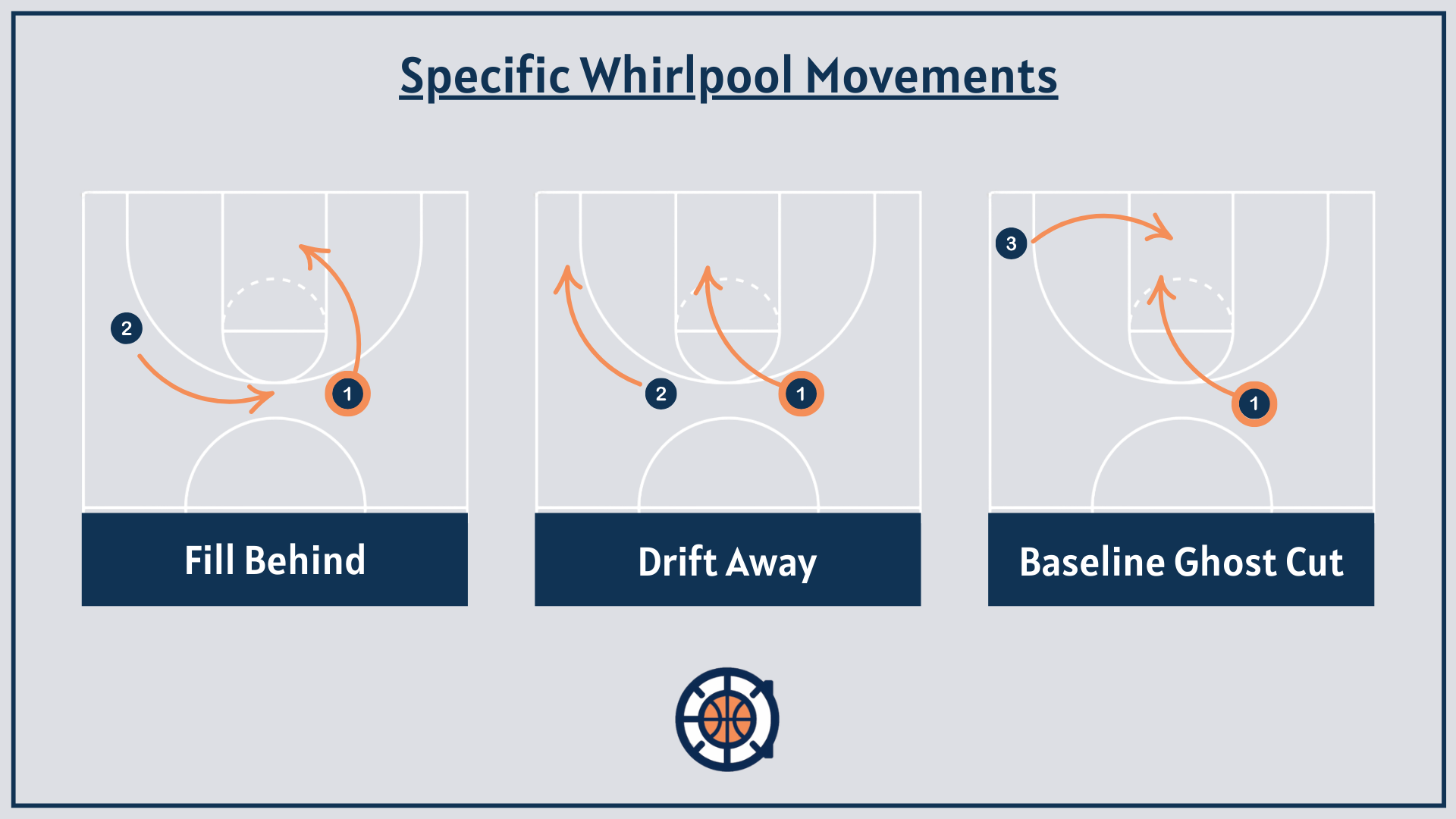
- Every off-ball player on the court will move in the direction of the drive with the exception of the player in the corner (the corner will hold and hover)—we call this the whirlpool
- Players in the whirlpool should move:
- Early (on the first attacking dribble to the basket)
- With the intent of getting open (by getting in their defender’s blindspot)
- Players in the whirlpool should not:
- Stop moving
- Retrace their steps
- They are in a whirlpool. The whirlpool makes it impossible to stop or go against the momentum (even if they aren’t open, they must continue moving to maintain equal distance between teammates)
Reasons for Whirlpool
- Ties back to our offensive identity: It turns every drive into mini track meets all over the court, where the goal is to get the most separation to create the biggest advantage on closeouts
- Combats both strongside and weakside rotations by lengthening the distance of closeouts on drift passes and fill behinds
- Punishes defenders who stare at the ball on drives
- Ensures the driver knows where all of his teammates on the court are, even if he can’t see all of them
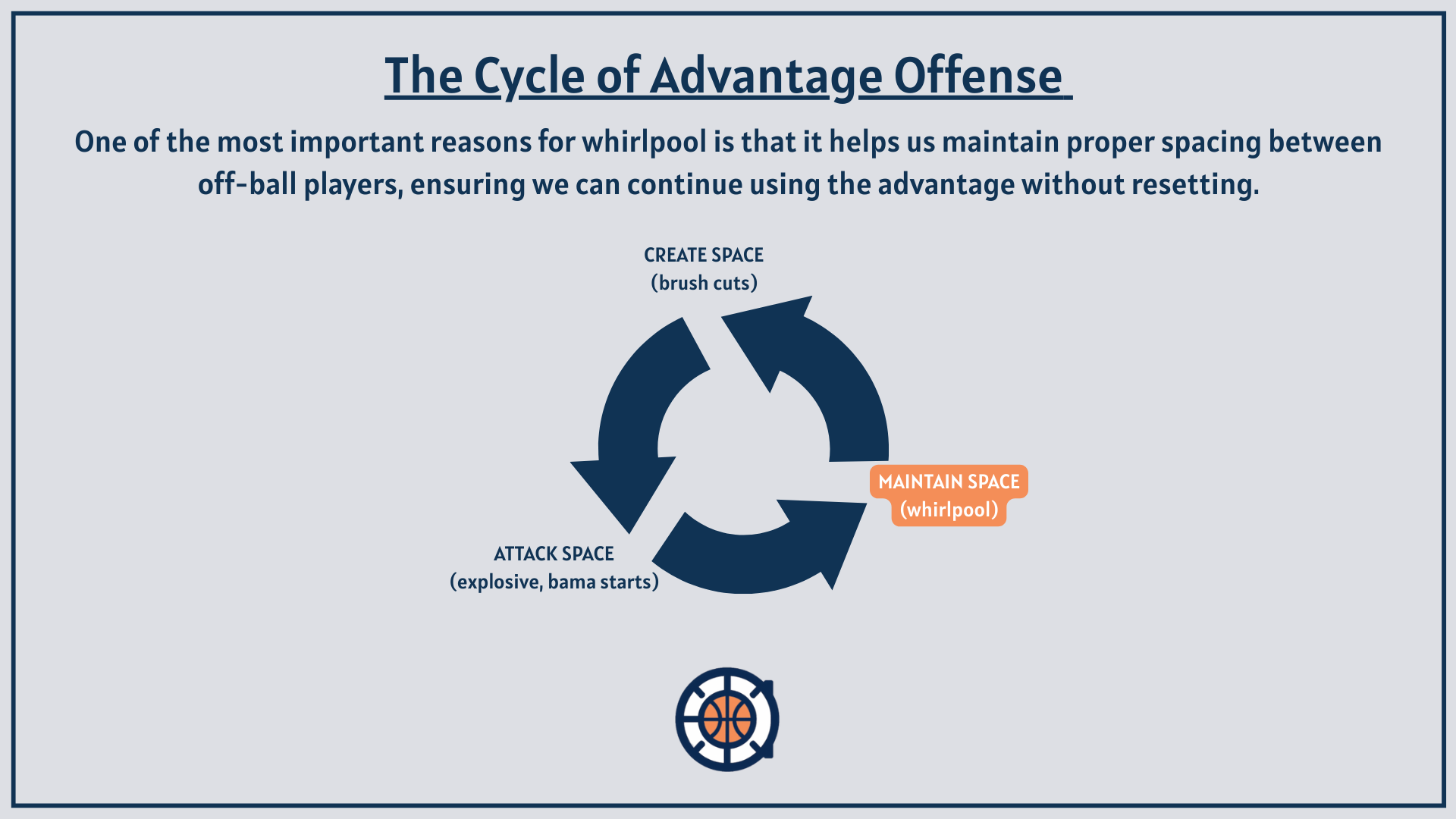
- Allows us to maintain spacing and ensure we can continue using the advantage without resetting
Hold and Hover
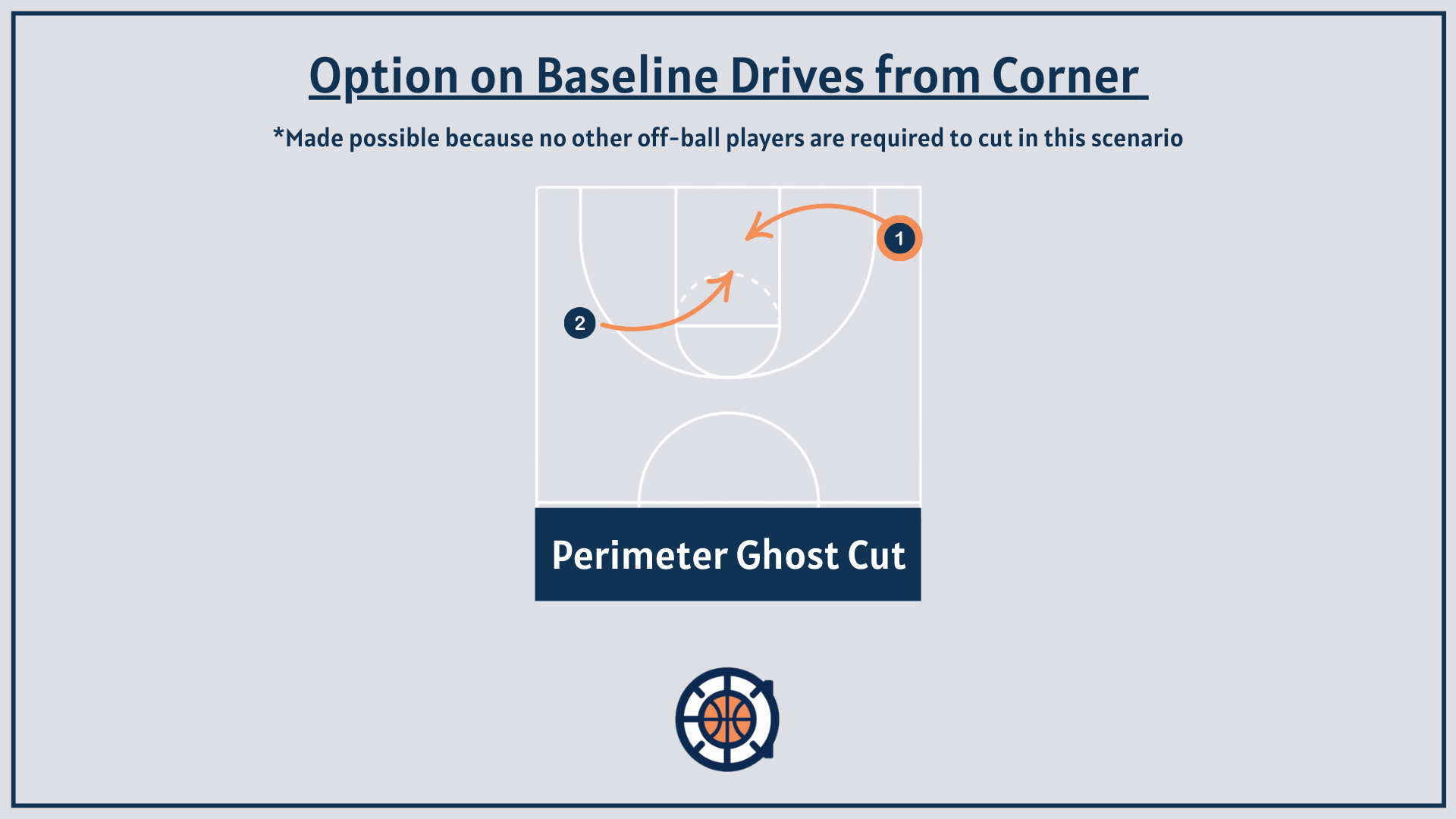
- The corner player should hold the corner until the driver picks up, or is holding, the ball
- The best time to ghost cut is when the drive is dead and looking at you (this is when defenders get distracted and stare)
- On this ghost cut (disappearing from one spot on the floor and reappearing in another), the cutter will hover around one or both sides of the rim
- The cutter should slow down inside the arc and not just get in and get out (they should think: how/where can I score?)
Meet or Beat
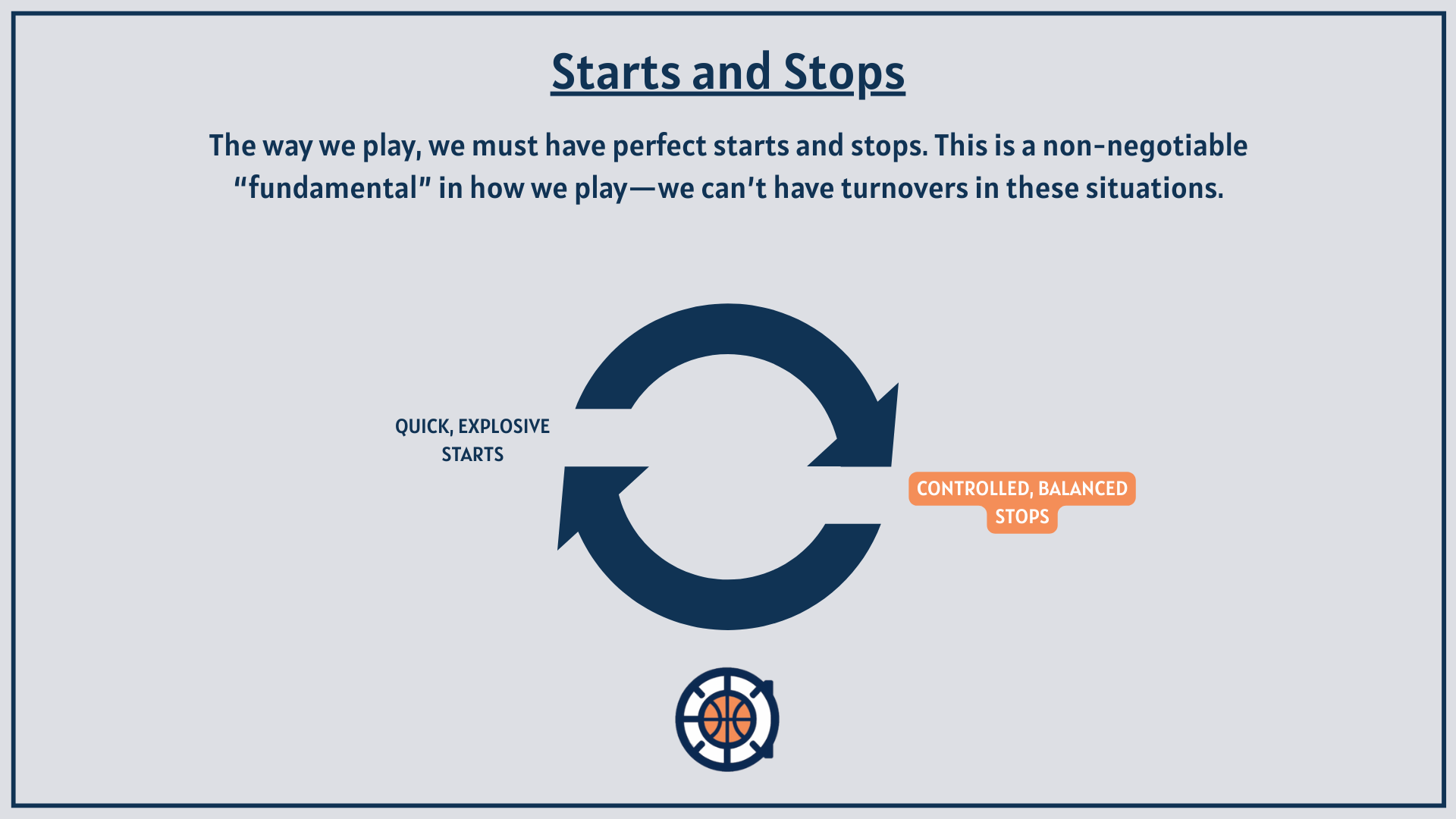
- In determining how to "stop," we must ask ourselves: Meet or beat?
- If we are beating a defender, shoot off of one foot because it’s quicker
- We still want control (think high jump over long jump)
- If we are meeting a defender, play off of two feet with a jump stop/stride stop because it helps you gain power/leverage and allows you to maximize your options
- In these situations, we stress 2.9 (you have 2.9 seconds to pivot and find the best decision possible—the ball is now behind the defense and heads will turn)
- When we pass from this situation, the goal is to make the recipient an all-state player (throw a strike, make sure it’s the right decision)
How to Implement/Teach
- Games with stoppages (like blind start) provide natural opportunities to review and reflect (especially on lower load days)
- Recreate scenarios, ask questions, replay the possession from that point (doing it correctly this time)
- Games that are continuous (like FIBA) need quicker consequences/rewards
- Turnovers (coach states the name, offense drops the ball, and game continues) for not moving in the whirlpool
- Either type of game can have musts (things that must happen before shooting), bonus points, or game overs
- If players are struggling with a concept, give it a name
- Whirlpool was invented out of players taking two steps and then retracing
- We call scoring on cuts a lights out, an auto-win in anything we do
- As with anything, tracking and sharing the data will help emphasize it
- In our first year running this offense, it took us a while before players started making plays off of two feet. Stopping, pivoting, and passing to the fill is not something players have been taught. Yet, it’s a great indicator of our decision-making (whether we are driving under control—you can’t pivot if you aren’t under control, and how well we are diversifying our passes out of the paint)
- I charted our pass to fill percentage off of drives during the season and we discussed it in every film session